

Stories
Media Roll Storage
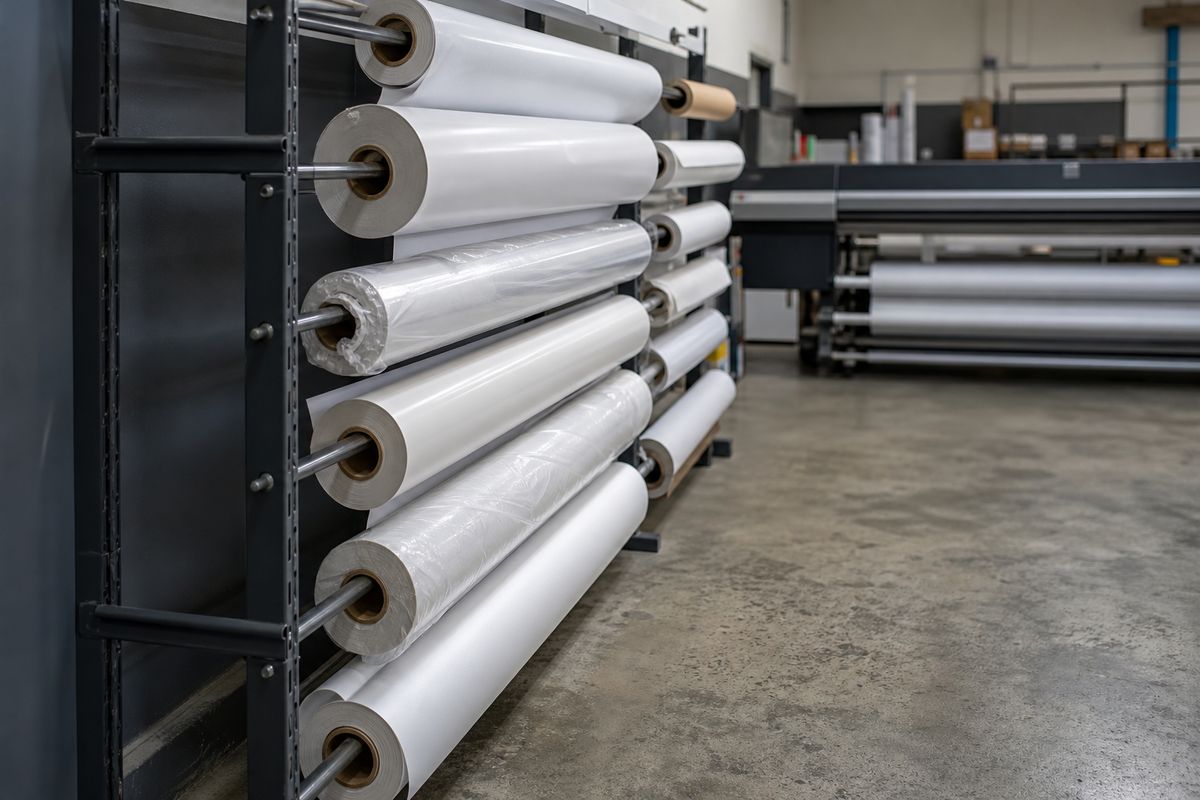
Good media can print badly if it was stored badly. This note covers how we ask print floors to rack, wrap and rotate their rolls.
Where print problems really start
A lot of the large-format faults we get called out for are not printer faults. Banding on one edge, ink pooling in patches, a roll that wanders during a long print. When we check, the roll was stored standing on its end in a corner, or lying flat on the concrete next to the roller door. Media is sensitive to how it is kept, and the printer only shows the result.
This is especially true at the coast. Shops in Durban and Port Elizabeth see paper and some vinyls pick up moisture in a few days of high humidity, while Highveld shops fight dust that settles on the roll edges and ends up on the print.
Basic storage rules
- Store rolls horizontally on bars or in their original end caps
- Keep rolls off the floor and away from external doors
- Leave the plastic wrap on until the roll goes on the printer
- First in, first out, mark the delivery date on the core
Racks beat corners
A simple wall rack with steel bars through the cores is the best investment a small print shop can make. The roll hangs from its core so nothing presses on the media surface, which stops the flat spots that show up as pressure marks on glossy vinyl. If the rack is near the printer, it also saves the operator carrying heavy rolls across the shop.
Do not stand rolls on their ends for long periods. The edge takes the weight and gets crushed slightly, and that edge then feeds unevenly. For short storage, the cardboard box with end caps is fine, but stack boxes only as high as the manufacturer allows.
Climate and acclimatising
Media should sit in the print room for a day before printing if it came from a cold store or a hot delivery van. A roll that comes straight off a truck in January can be warm and slightly expanded, then shrinks as it cools on the printer. Keep the print room steady if you can, roughly 18 to 25 degrees and away from extreme humidity. A cheap hygrometer on the wall tells you more than guessing.
Our floors pages cover how we lay out print cells around storage and finishing, and the frames range lists the printers we support.
Rotate and record
Keep a short list on the rack: media type, delivery date and which job it is for. Use the oldest rolls first, especially coated papers and photo media that age faster. If a part roll comes off the printer, rewrap it straight away rather then leaving it open on the bench. It sounds fussy but it saves alot of reprints.
If you keep getting edge or moisture problems even with good storage, send photos of the print fault and the storage area through our contact form. We can help work out whether it is the media, the room or the machine. You might also find the humidity tips story and our installs notes useful.